
 Capricornnews
Explore India’s One Of The 20+ Most Famous Tourist Places In India That You Must Visit once In a Lifetime
01) Pangong Tso Lake (Ladakh) :
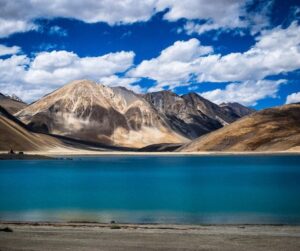
Pangong Tso is one of the highest Salin water lakes in the world stretching across international border approximately one third of the lake is located in India while the rest extends into the Tibet and China.
The lake is an important breeding ground for a variety of birds including multiple migratory species. The region surrounding pangong migratory species. The region surrounding Pangong is also home to the rare and exclusive snow leapord.
This salin lake is a place of solitude with minimal human impact. Its isolation and the extreme condition of its location limit permanent human settlements but has become a sort after destination for those seeking peace of mind.
02) Humayun’s Tomb (Delhi) :

It is commissioned by the grieving empress bega beum in 1558 stands as a tribute to her beloved husband. The second Mughal emperor. Humayun’s Tomb was the first garden Tomb on the indian subcontinent introducing a style that would later inspire the iconic Taj Mahal.
03) Ajanta and Ellora Caves (Maharashtra) :
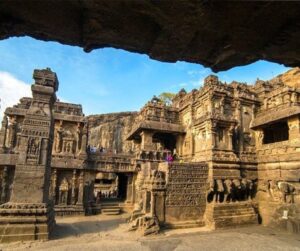
Ajanata and Ellora caves are two incredible ancient sites located in the state of Maharashtra. The Ajanta caves are famous for their beautifully painted cave walls and ceiling using natural color.
Artists created details scenes over 2000 years age, depicting the life of Buddha and his past lives according to Buddhist teachings at the Ellora caves we see an amazing variety of carved stones temples and monasteries some are Hindu, some buddhist and some Jain.
04) Meenakshi Ammam (Tamil Nadu) :
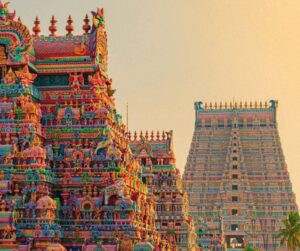
This temple dedicated to the goddess Meenakshi and consort Lord Shiva stands as one of the most iconic landmarks in the colorful city of Mador, every year this temple attracts millions of visitors drawn not just by its spiritual significance but by its stunning dravidian architecture.
The tower or Korum of the Meenakshi Ammam temple are Marvel of Architecture and an integral part of its iconic skyline. These Gorum are large pyramidal towers that are covered in stucco figures and they mark the entrances to the temple complex.
05) Mysore Palace (Karnataka) :
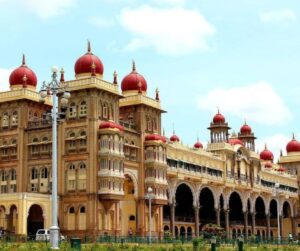
This palace was built on the ruins of its wooden predecessor which was destroyed by fire during a wedding in 1896 every year during the Dada festival. Mysore Palace is illuminated by nearly 100,000 lights bulb turning it into a glowing symbol of celebration.
06) The Indian Himalayas :
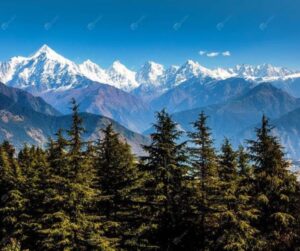
This massive stretches across five states in Northern India. Many of its peaks river and forest are considered sacred in Hinduism, buddhism and other local belief. This sanctity makes the Himalyas a destination for million of Pilgrims each year.
The Indian Himalayas are still growing each year due to relentless tectonic activity where plates collides the range rises by about an inch. This means that the highest peaks we see today might not hold their records forever as they are constantly changing shaped by forces beyond human control.
07) Hawa Mahal (Rajasthan) :
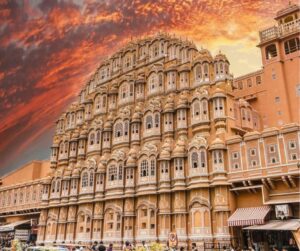
This Mahal is an iconic structure of Jaipur representing the inferior fusion of Rajput and islamic architectural styles. The primary purpose of the palace was to allow royal women to observe everyday lifestyles and festivals celebrated in the streets below without being seen the facade made from red and pink sandstone resembles the Honey Comb of a beehive and features 953 small windows catching the eye of all who pass by.
In addition the clever design of the windows allowed the palace to remain cool during the hot Rajasthan summers creating a natural air conditioning system. They gave the palace its name , ‘Palace of Wind’.
08) Taj Mahal (Uttar Pradesh) :
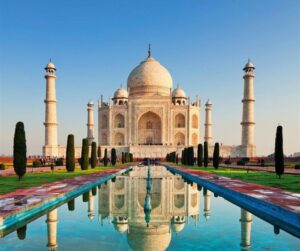
It is often described as a teardrop on the cheek of time is recognised worldwide as a symbol of Love and loss located in Agra. The unique creation was ordered by the Mughal Empror Shah Jahan as a tribute to his beloved lovely wife who tragically passed away while giving birth build primarily from white marble that reflect shades of Pink at dawn and golden sunset.
The monument features intricate inlay work of precious and semi-precious stone. According to a popular legend the emperor wanted to ensure no one would recreate the Taj Mahal’s beauty to ensure that such a masterpiece remained unique he ordered that principal architects and craftsmen face severe consequences preventing them from recreating a similarr building once it was completed.
09) The Group Of Monument At Mahabalipuram (Tamil Nadu) :
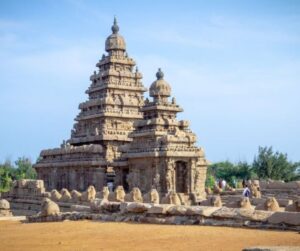
Close to the shore temple is the group of Monements at Mahabalipuram. This is a remarkable collection of 7th and 8th CE religion and architectural sites.
The site features ancient monuments that marks a significant period in the development of South Indian Art. Today Mahabalipuram is a protected heritage site, a place where art meets spirituality and history meets craftsmanship.
10) Chhatrapati Shivaji Terminus (Mumbai) :
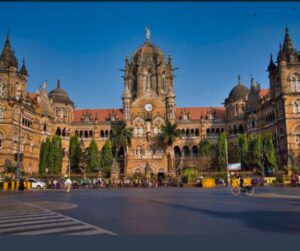
This originally called Victoria Terminus, is a historic train station in Mumbai and UNESCO world heritage site. Its a beautiful example of how british and Indian architectural style come together at the entrance.
You will find two columns, one is top with a lion representing Britain and the other with a tiger symbolizing India. When the station first opened its doors in 1887 it was the priciest building in Mumbai costing what would now be about $26 Million.
That investment paid off making Chhatrapati Shivaji terminus a beacon of Mumbai’s commercial success under British rule and making it an India’s first railway station. This is India a land full of natural wonders and incredible architectural marvels.
11) Nokhalikai Falls (Meghalaya) :
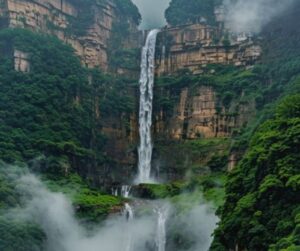
High in the rain drenched Hills of neala lies in Nokhalikai falls. This waterfall is one of the tallest in India.
12) Jaipur Wall (Rajasthan) :
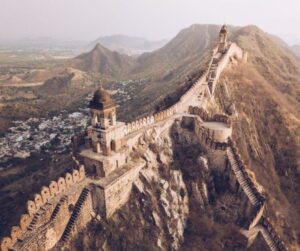
The Jaipur wall protects the fort amd guard the old part of the city, also known as the great wall of India. It was built with strategic watchtowers and seven strong gates that controlled access each serving as a chechpoint and defensive barrier even as the city grew the wall remained a relic of the past yet continued to be a vital part of jaipur forming its present character.
13) Red Fort (Delhi) :

Red Fort rises proudly in the busting city of Delhi constructed in 1648, it was initially called the blessed fort. Interestingly enough. The fort’s iconic red hue wasn’t part of its original design when Shah Jahan built it.
The fort gleamed in brilliant white marble, it was only later that the british coated the walls in red creating the distinctive look. We recognize today it plays a central role in the annual independence day symbolizing the enduring spirit and unity of the nation.
14) Golden Temple (Punjab) :
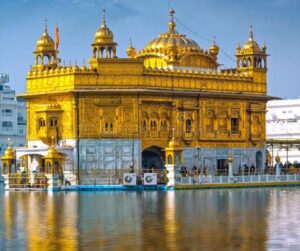
The golden temple is a special place in the city of Amritsar, it has four entrances which means anyone can enter no matter their religion or background. This shows the Sikh belief of equality and welcoming all people.
The temples design blends Hindu and Islamic styles, it covered in real gold which gives it a shinny golden appearance inside the golden temple is the largest kitchen serves free meals to thousands of people everyday. It doesn’t matter what race religion or how wealthy or poor someone is the langar meal are for everyone. This demonstrates the Sikh Values services and Kindness to all.
15) Jama Masjid (Delhi) :
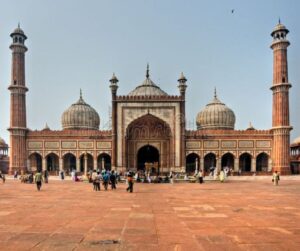
This Masjid is among the largest Mosques in India. India commissioned by Shah Jahan. The same emperor who built the Taj Mahal completed in 1656, it is a vital place for muslim to worship in Delhi.
People come from all over the country especially during the holy month of Ramadan and Eid which are two major celebration for Muslim.
16) Amber Palace-Fort (Rajasthan) :
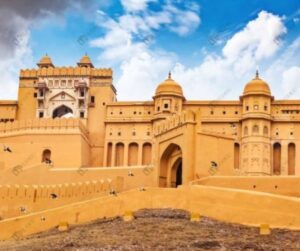
This grand Fort was constructed strategically upon the rugged hills of Rajasthan. The outside walls of the fort are very strong but the inside is delicate. There are beautifully painted scenes mirror work and carved panels that tells stories without words.
One of the traditional experience at Amber fort is the elephant ride up the hill to the main entrance, although this has become controversial in terms of animal welfare, their concerns the most intriguing thing about Amber fort is underground tunnel which was once a secret passage.
This path was built as an escape route for the royal family in case of an attack ensuring a safe exit to the hills that surrounds these buildings.
17) Mahabalipuram Shore Temple (Tamil Nadu) :
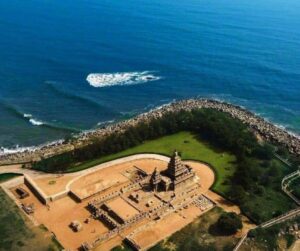
On the sandy shores of the Bay Of Bengal is the Mahabalipuram shore temple. Carved from granite blocks hauled from a nearby quary, its one of the oldest stone temples in South India.
unlike most temples of its time it was constructed from the top down with each level added in succession adorned with eleborate carvings that narrates tales from hindu mythology. Historically this positioning was not merely a IC. But also served a navigational purpose for sailors.
18) Jatayu Earth center (Kerala) :
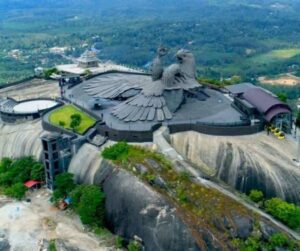
It is a home to the world’s largest bird sculpture depicting the legendary eagle Jatayu from the Hindu epic Ramayana in the Ramana Jatayu a noble eagle tried to rescue Sita from the Demon King Ravana but was overpowered and mortally wounded losing a wing in the struggle in the very spot in a world, violence against women remain a pressing issue. The jatayu earth center is dedicated to their safety and honor.
19) Kumbhalgarh Fort (Rajasthan) :
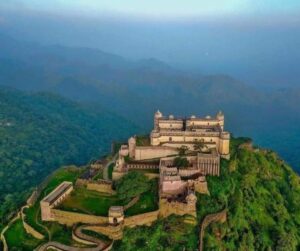
It is located in the Mountain of the Aravali Range in Rajasthan built in the 15th century by Rakumba, the fort boast the second longest wall in the world which stretches for 22 miles surprisingly inside these vast walls you will find a quite seren space filled with over 360 temples 300 of them ancient jain and the other Hindu.
20) The Gateway Of India (Mumbai) :

It was constructed as a symbol of Trumph and colonial prestige it was made a commemorate the visit of King George V and Queen Marry to India in 1911 it was meant to signify the permanence of the British presence in India but it became a symbol of freedom along the waterfront of Mumbai the Gateway combines elements of Hindu and Muslim architectural styles to show the unity of the Indian empire under British rule.
The gateway of India may have been built by The british but it is now part of Mumbai and it will forever be a source of hope and inspiration for generation to come.
21) Swaminarayana Akshardhan (New Delhi) :
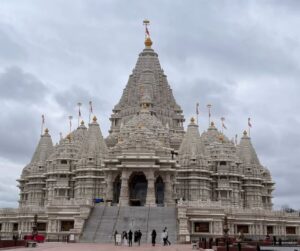
In the sprawling city of new Delhi we see swining orion a shardon. This complex completed in 20005 serves as a vivid showcase of traitional Hindu and Indian architectural principle carved in sandstone and marble perhaps the most astonishing fact about Aadam is that no steel was used in its construction crafted by 11,000 artisian and volunteers.
The temples intricacy reveals stories from ancient scripture resplendant with over 20,000 statues figures and floral motifs that adorn its structure.
22) Keibul Lamjao National Park (Manipur) :
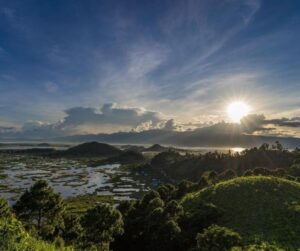
This park serves as the last natural habitat for the endangered Sangai Deer or also known as the brown antler deer or the dancing deer of Manipur.
23) Loktak Lake (Manipur) :

In the Northeast region of India lies a natural wonder that has captivated the hearts and minds of people for generation Loktak Lake is the largest freshwater lake in the region. This lake is distinguished by its farm which are Heterogenous masses vegetation soil or matters at various stages of decomposition floating over, it is form of miniature island.
Explore Related Informative Articles
01) 12 Famous and Most Mysterious Temples In India
02) 12 Famous Buddhism Temples Around The World